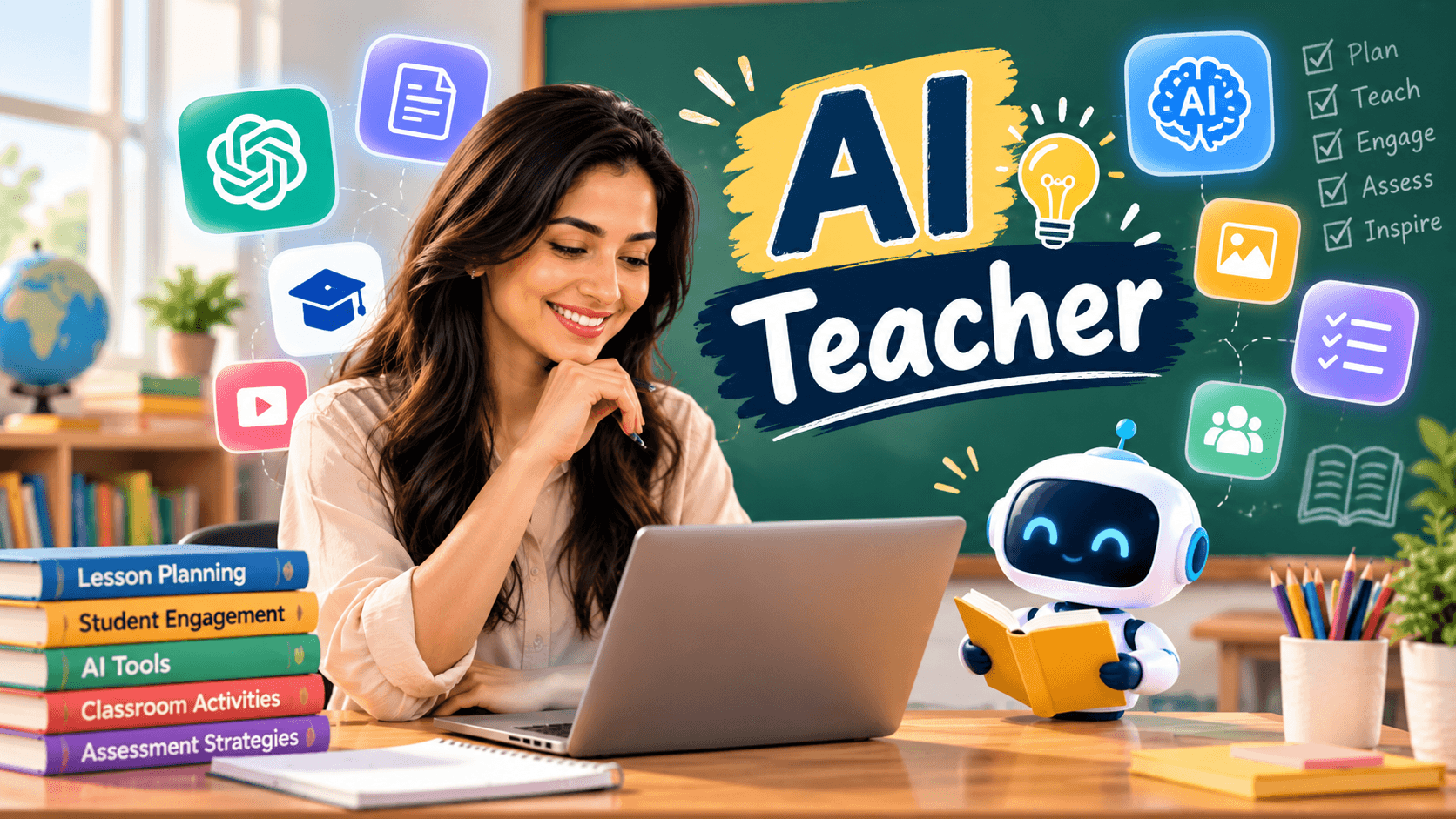
Education has always evolved alongside technology, but nothing has sparked as much excitement and debate as the emergence of the AI teacher.From smart tutoring apps to fully interactive virtual classrooms, artificial intelligence is no longer a futuristic concept confined to science fiction. It has become a practical tool reshaping how students learn, how teachers teach, and how knowledge is delivered across the globe. In this blog, we’ll explore what it really is, how it works, the benefits it brings to modern classrooms, and the challenges that come with this technological shift.
What Is an AI Teacher?
An AI teacher refers to an artificial intelligence system designed to assist, supplement, or in some cases replace traditional human instruction. These systems use machine learning, natural language processing, and data analytics to understand a student’s learning pace, identify knowledge gaps, and deliver customized lessons in real time.
Unlike a traditional teacher who manages an entire classroom of students with varying abilities,it can focus on each learner individually.It analyzes performance data continuously, adjusting difficulty levels, suggesting practice exercises, and even predicting where a student might struggle before they do. This level of personalization was simply impossible in conventional classroom settings just a decade ago.
How Does an AI Tutor Work?
The technology behind an AI teacher combines several advanced fields:
- Natural Language Processing (NLP): This allows it to understand student questions written or spoken in natural language and respond conversationally, much like a human tutor would.
- Machine Learning Algorithms: These help the system learn from each interaction, improving its recommendations and teaching strategies over time.
- Data Analytics: By tracking quiz scores, response times, and engagement patterns, it builds a detailed profile of each student’s strengths and weaknesses.
- Adaptive Learning Paths: Based on this data, the system creates a personalized curriculum, ensuring students spend more time on topics they find difficult and less time repeating what they already know.
Together, these technologies allow it to function almost like a personal tutor available around the clock something no human educator could realistically offer to every student.
Benefits of Having an AI Teacher
1. Personalized Learning Experience
Perhaps the biggest advantage of it is its ability to tailor content to individual needs.Every student learns differently; some grasp concepts quickly, while others need more repetition and different explanations. It adjusts its teaching style automatically, offering visual aids, extra practice problems, or simplified explanations depending on what works best for that particular learner.
2. 24/7 Availability
Traditional teachers have limited office hours, but they never sleep. Students can ask questions late at night before an exam or review a difficult topic during weekends without waiting for the next school day.This constant accessibility significantly improves learning outcomes, especially for students who need extra support outside regular class hours.
3. Instant Feedback
One of the most frustrating parts of traditional education is waiting days or even weeks for graded assignments. An editor can evaluate answers instantly, pointing out mistakes and explaining the correct approach immediately.This rapid feedback loop helps students correct misunderstandings before they become deeply ingrained habits.
4. Reduced Workload for Human Teachers
Contrary to popular fear, it isn’t necessarily designed to replace human educators it’s often built to support them.By handling repetitive tasks like grading, tracking attendance, and generating practice questions, then it frees up human teachers to focus on what they do best: mentoring, inspiring, and providing emotional support to students.
5. Cost-Effective Scalability
Schools and institutions in underserved or remote areas often struggle to hire enough qualified teachers. An AI teacher can bridge this gap by delivering quality instruction to thousands of students simultaneously, at a fraction of the cost of hiring additional staff.
Real-World Examples of AI Tutors
Several platforms have already integrated it technology into their systems. Intelligent tutoring systems used in language learning apps analyze pronunciation and grammar mistakes in real time, offering corrections instantly.Similarly, math-focused platforms use adaptive algorithms to identify exactly which concept a student is struggling with whether it’s fractions, algebra, or geometry and generate targeted practice sets.
In some countries, pilot programs have introduced robots into physical classrooms, capable of answering questions, reading stories aloud, and even displaying facial expressions to engage young learners.While still experimental, these examples show how rapidly the technology is advancing.
Challenges and Concerns Surrounding AI Tutors
Despite its many advantages, the concept of an AI teacher isn’t without controversy. Several important concerns need to be addressed as this technology continues to grow.
Lack of Emotional Intelligence
Human teachers do more than deliver information; they read body language, sense frustration, and offer emotional encouragement. And it, no matter how advanced, still struggles to replicate genuine empathy and the human connection that plays a crucial role in a student’s motivation and confidence.
Data Privacy Issues
Since it relies heavily on collecting and analyzing student data, concerns about privacy and data security are valid. Schools and developers must ensure this sensitive information is protected and used responsibly, in compliance with relevant regulations.
Risk of Over-Reliance on Technology
There’s a risk that students may become overly dependent on it for answers, potentially weakening critical thinking and problem-solving skills that develop through struggle and independent effort.
Accessibility and Equity
Not every student has access to reliable internet or devices needed to interact with an Air. Without careful planning, this technology could widen the gap between privileged and underprivileged learners rather than closing it.
The Future of AI Tutors in Education
Looking ahead, it’s clear that the AI teacher is not a passing trend but a permanent fixture in the evolving landscape of education. As natural anguage models become more sophisticated, in the future it will likely offer even more nuanced conversations, better emotional recognition through voice and facial analysis, and deeper integration with school curriculums worldwide.
Rather than replacing human educators, the most successful model will likely be a hybrid one where it handles data-driven personalization and repetitive tasks, while human teachers focus on mentorship, creativity, and emotional guidance. This partnership between artificial intelligence and human expertise has the potential to create the most effective learning environments the world has ever seen.
Conclusion
The concept of an AI teacher is transforming how we think about education. By offering personalized learning paths, instant feedback, and round-the-clock availability, this technology addresses many of the limitations found in traditional classrooms. However, challenges like emotional intelligence, data privacy, and accessibility must be carefully managed to ensure this innovation benefits all students equally.
As schools and institutions continue experimenting with AI-driven tools, one thing is certain: it is here to stay, and its role in shaping the future of global education will only continue to growl.
Related guides
AI for education: learning applications · Will AI replace teachers? · Khanmigo review
Further reading: UNESCO guidance on generative AI in education and research.