Every teacher knows the feeling. It’s Sunday evening, the week ahead is packed, and you’re staring at a blank lesson plan wondering where the time went. Great teaching takes creativity, energy, and careful preparation, but no one can build every worksheet, quiz, and activity from scratch. That is exactly why teacher resources exist: to save time, spark fresh ideas, and help every student learn more effectively.
In this guide, you’ll learn what these materials are, the main types available, where to find trustworthy ones, how to judge their quality, and how to organize everything so it actually makes your life easier. Whether you’re a first-year teacher or a seasoned veteran, you’ll find practical takeaways you can use this week.
Read next:khanmigo vs magicschool
What Are Teacher Resources?
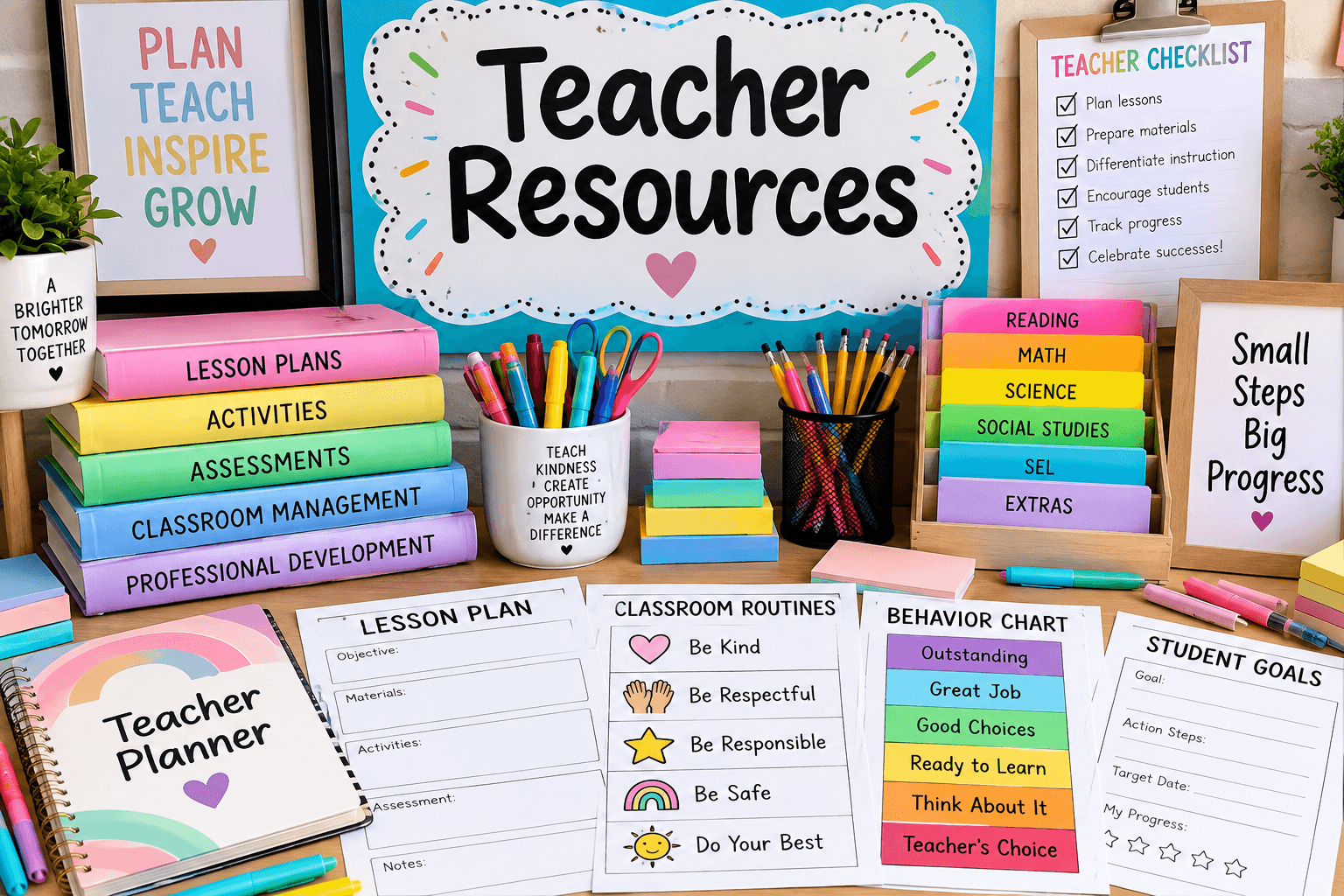
Teacher resources are any materials, tools, or services that support planning, delivering, and assessing instruction. They include printable worksheets and lesson plans, digital platforms, videos, books, games, and professional communities. Some are free, some are paid, some are created by colleagues down the hall, and others are built by education companies, libraries, museums, and non-profits.
The best materials share three qualities. They align with clear learning goals, they can be adapted for different learners, and they are simple enough to use without hours of extra prep. A flashy resource that takes two hours to set up and delivers a five-minute payoff isn’t really a resource at all.
Why Teacher Resources Matter
Good materials do more than fill time. They shape the quality of learning in your classroom in several ways.
They save planning time. Surveys of educators regularly place planning and grading among the heaviest parts of the job. Ready-made or adaptable materials give you back hours you can spend on feedback, student relationships, or rest.
They support differentiation. Students arrive with different backgrounds, reading levels, and needs. A strong library of materials makes it easier to offer extra support to some learners and extra challenge to others.
They boost engagement. Interactive activities, real-world examples, and multimedia content can turn a passive lesson into an active one.
They encourage professional growth. Exploring new tools and methods exposes you to fresh approaches, keeping your teaching sharp and your enthusiasm high.
Main Types of Teacher Resources
Understanding the categories helps you spot gaps in your own toolkit.
1. Lesson Plans and Unit Plans
Complete plans give you a structure to follow or remix. Look for ones that include objectives, materials lists, timing, discussion questions, and assessment ideas. Even if you never use a plan exactly as written, it can save you the hardest part: getting started.
2. Worksheets and Printables
Worksheets remain a classroom staple, especially for practice and review. The best ones ask students to think rather than simply copy. Graphic organizers, sorting activities, and open-ended prompts often outperform basic fill-in-the-blank pages.
3. Digital Tools and Apps
Learning platforms, quiz tools, collaborative whiteboards, and interactive simulations can make lessons more dynamic. They are especially useful for instant feedback, blended learning, and reaching students who learn best by doing.
4. Assessment Tools
Rubrics, exit tickets, question banks, and formative checks help you see what students actually understand. Quick, low-stakes assessments are particularly valuable because they let you adjust your teaching in real time.
5. Classroom Management Materials
Behavior charts, routines and procedures templates, seating plan tools, and attention signals help create a calm, predictable environment. Strong management makes every other resource more effective.
6. Professional Development Materials
Books, podcasts, webinars, online courses, and teaching blogs help you grow your skills. Many educators find that a single new strategy per month adds up to a big change over a school year.
Read next:brisk vs magicschool
7. Open Educational Resources (OER)
OER are teaching and learning materials released under open licenses, which means you can typically use, adapt, and share them for free. They are a wonderful option for schools with limited budgets, though you should always check the specific license terms.
Where to Find Quality Teacher Resources
You don’t need to search the entire internet. A handful of reliable sources can cover most of your needs.
Educator marketplaces. Sites such as Teachers Pay Teachers let educators sell and share materials. Many items are affordable, and previews and reviews help you judge them before buying.
Free educational platforms. Khan Academy, PBS LearningMedia, and OER Commons offer large libraries of lessons, videos, and activities across many subjects and grade levels.
Museums, libraries, and agencies. The Library of Congress, the Smithsonian Learning Lab, and NASA all publish free classroom materials built around primary sources, artifacts, and real science.
Professional associations. Organizations such as NCTE (English), NCTM (mathematics), and NSTA (science) provide journals, lesson ideas, and standards-aligned guidance for members and often for the public.
Your school and district. Curriculum coordinators, instructional coaches, and shared drives often hold hidden gems. Ask colleagues what they use before you search elsewhere.
Online teacher communities. Social media groups, forums, and newsletters are great for swapping ideas and asking practical questions. Just remember that popular does not always mean high quality, so evaluate what you find.
How to Evaluate Teacher Resources Before You Use Them
A quick check can save you from wasting a lesson. Before adopting any material, ask yourself these questions:
- Is it aligned? Does it match your standards, curriculum, and the specific skill you’re teaching?
- Is it accurate? Check facts, answer keys, and examples. Errors slip into even popular materials.
- Is it age-appropriate? Consider reading level, vocabulary, images, and the amount of independent work expected.
- Is it accessible? Can students with different needs, including English learners and students with learning differences, participate meaningfully?
- Is it flexible? Can you edit it, scale it up or down, or use part of it?
- Is the prep time reasonable? Estimate the setup cost against the learning payoff.
- Does it encourage thinking? Prioritize materials that ask students to explain, compare, create, and apply rather than only recall.
If a resource passes most of these checks, it’s likely worth a try. If it fails on alignment or accuracy, move on, however attractive it looks.
Free vs. Paid: Choosing the Right Option
Many educators wonder whether they should pay for materials. The truth is that both have a place.
Free options are ideal for supplementing lessons, exploring new ideas, and building a foundation, especially if you are on a tight budget. Paid options can be worth it when they offer complete, well-designed units, consistent formatting, or time-saving extras like answer keys, editable files, and digital versions.
A simple rule works well. Start with free materials, and only pay when a product solves a clear problem or saves a meaningful amount of time. Check whether your school will reimburse purchases, and look for licensing that allows use across your own classes. When comparing free and paid teacher resources, always read reviews and look at previews first.
How to Organize Your Collection
Collecting materials is easy. Finding them again in October is the real challenge. A little organization goes a long way.
- Use a clear folder system. Organize by subject, then unit, then lesson type, such as “Grade 5 Science > Ecosystems > Labs.”
- Name files consistently. Include the topic, grade, and type: “Fractions_Grade4_ExitTicket.”
- Keep a “tested” list. After using something, jot down what worked, what didn’t, and what you’d change.
- Save links with notes. A bookmarked website is far more useful with a short note about why you saved it.
- Back up everything. Cloud storage protects you from lost devices and corrupted files.
- Review each term. Remove outdated or unused items so your collection stays lean and useful.
Common Mistakes to Avoid
Even experienced educators fall into a few traps.
Hoarding without using. A folder of five hundred unused files does not help anyone. Save fewer items and use them more often.
Skipping the preview. Always read through a material yourself, and test digital tools before class.
Following without adapting. Your students are unique. Adjust examples, pacing, and difficulty to fit them.
Ignoring copyright. Respect licenses and terms of use, especially when sharing or posting materials publicly.
Chasing every trend. New apps and strategies appear constantly. Choose tools that solve a real classroom problem rather than adopting them because they’re popular.
Frequently Asked Questions
Are free materials as good as paid ones?
Not always, but often. Quality depends on the creator and the design, not the price. Evaluate each item with the checklist above.
How many tools should I use at once?
Fewer than you think. A small, reliable set that you know well usually beats a long list you barely understand.
How can I keep up with new ideas without feeling overwhelmed?
Pick two or three trusted newsletters, blogs, or communities and check them regularly rather than trying to follow everything.
Can I share materials I create?
Yes, in most cases, but check your school or district policy first, since some employers have rules about materials made as part of your job.
Final Thoughts
Teaching will always demand creativity, patience, and heart, but you don’t have to do it alone or from scratch. The right teacher resources can lighten your workload, deepen student understanding, and make your classroom a more energetic place to learn. Start small: choose one area where you’d like more support, whether that’s assessment, engagement, or planning. Find one or two quality materials, test them, and keep what works.
Over time, you’ll build a personal toolkit that reflects your style and serves your students well. And remember that the most valuable resource in any classroom is still the teacher, so use these tools to free up your time and energy for the moments that matter most.
Read next:ai worksheet generator