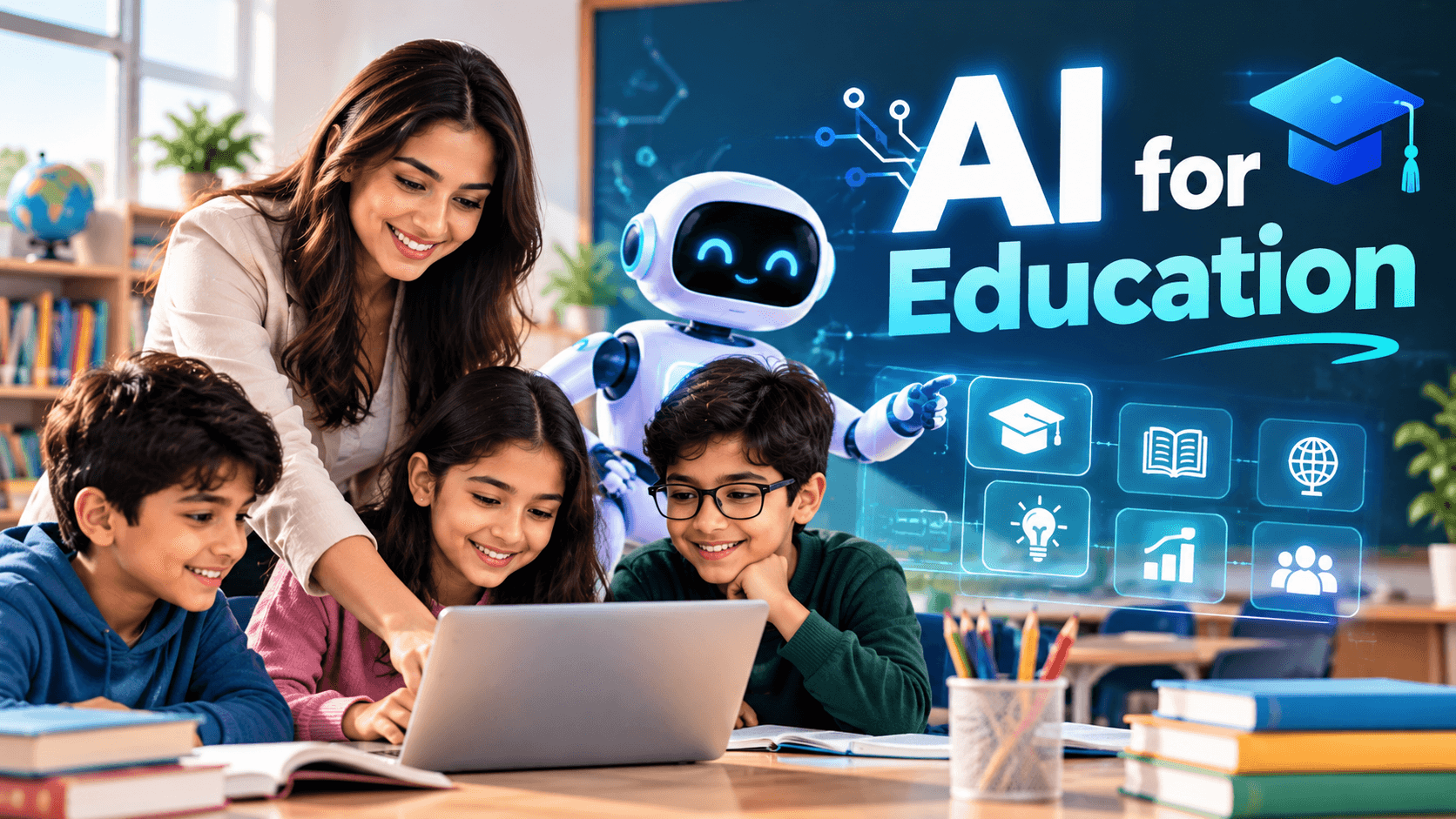
The integration of AI for education has rapidly become one of the most talked-about developments in the learning landscape today. From personalized learning paths to intelligent tutoring systems, artificial intelligence is reshaping how students learn, how teachers teach, and how institutions manage academic processes. As classrooms evolve beyond traditional chalk-and-board methods, understanding the true impact of it has never been more important for students, educators, and policymakers alike.
What Does AI for Education Really Mean?
At its core, AI for education refers to the use of machine learning algorithms, natural language processing, and data analytics to enhance teaching and learning experiences. Rather than replacing teachers, this technology acts as a powerful assistant automating repetitive tasks, identifying learning gaps, and offering customized content that adapts to each student’s pace and ability.
Unlike generic educational software, AI-powered tools continuously learn from student interactions. This means the system becomes smarter over time, refining its recommendations based on real performance data rather than assumptions.
Key Benefits of AI for Education
1. Personalized Learning Experiences
One of the most significant advantages of AI for education is its ability to deliver truly personalized instruction. Every student learns differently, some grasp concepts quickly through visuals, while others need repeated practice with written exercises. AI-driven platforms analyze individual performance patterns and adjust difficulty levels, content types, and pacing accordingly. This ensures no student is left behind while advanced learners aren’t held back either.
2. Intelligent Tutoring Systems
Intelligent tutoring systems powered by AI can simulate one-on-one tutoring at scale. These systems provide instant feedback, explain mistakes in real time, and suggest additional resources when a student struggles with a topic. This application of it is particularly valuable in subjects like mathematics and science, where step-by-step problem-solving guidance makes a measurable difference in comprehension.
3. Automating Administrative Tasks
Teachers spend countless hours grading assignments, tracking attendance, and managing paperwork. AI tools now automate much of this administrative burden, freeing educators to focus on actual teaching and mentorship. Automated grading systems, powered by natural language processing, can even evaluate short written answers with impressive accuracy, making the case for AI for education even stronger from an efficiency standpoint.
4. Enhanced Accessibility for All Learners
For students with disabilities or learning difficulties, AI-based tools such as speech-to-text software, real-time translation, and adaptive interfaces have opened new doors. This dimension of it ensures inclusivity, allowing every student regardless of physical or cognitive challenges to access quality education on equal footing.
5. Data-Driven Decision Making for Institutions
Schools and universities generate massive amounts of data daily. AI systems can analyze this data to identify at-risk students, predict dropout rates, and recommend interventions before problems escalate. This predictive capability is transforming how institutions approach student retention and academic success.
Popular Applications of AI in Classrooms Today
- Chatbots and virtual assistants that answer student queries instantly, available 24/7
- Adaptive learning platforms like those used in language learning apps that adjust lesson difficulty
- Plagiarism detection tools that maintain academic integrity
- AI-powered content creation helping teachers design quizzes, lesson plans, and study materials faster
- Predictive analytics dashboards giving school administrators insights into student performance trends
Each of these applications demonstrates how deeply embedded artificial intelligence has become in everyday academic environments, further proving why the conversation around it continues to grow louder each year.
Challenges and Concerns Surrounding AI in Education
While the benefits are compelling, the adoption of it isn’t without its challenges. Critics raise valid concerns about data privacy, since these systems collect sensitive information about minors. There’s also the risk of over-reliance on technology, potentially diminishing critical thinking and human interaction in classrooms.
Additionally, not all schools have equal access to the infrastructure required for AI implementation. This creates a digital divide where well-funded institutions benefit significantly more than under-resourced ones, potentially widening existing educational inequalities rather than closing them.
Another concern involves algorithmic bias. If AI systems are trained on unrepresentative data, they may inadvertently disadvantage certain student groups. Ensuring fairness and transparency in these systems is essential as adoption scales.
The Future of AI for Education
Looking ahead, experts predict that itn will become even more sophisticated, integrating with virtual reality, gamification, and immersive learning environments. Imagine a classroom where AI tutors collaborate with human teachers in real time, or where students receive career guidance based on years of performance data combined with market trends.
Governments and educational bodies worldwide are already investing in AI research to create smarter, more equitable education systems. As these technologies mature, the focus will likely shift from simple automation toward genuinely intelligent, empathetic learning companions that understand not just what a student knows, but how they think and feel about learning itself.
How Educators Can Prepare
For teachers and institutions looking to embrace this shift, a few practical steps can ease the transition:
- Start small and introduce one AI tool at a time, such as an automated grading assistant, before scaling up.
- Invest in training ensures teachers understand how to interpret AI-generated insights rather than blindly trusting them.
- Prioritize data privacy, choose platforms with strong compliance standards and transparent data policies.
- Maintain human oversight AI should support, not replace, the teacher-student relationship.
Conclusion
The rise of AI for education marks a pivotal shift in how knowledge is delivered and absorbed across the globe. From personalized learning journeys to smarter administrative systems, artificial intelligence offers tools that can make education more efficient, inclusive, and engaging. However, thoughtful implementation balancing innovation with ethical responsibility will determine whether this technology truly benefits learners or merely adds complexity to existing systems. As we move forward, one thing is clear: those who adapt early to it will be best positioned to shape the classrooms of tomorrow.
Related guides
AI in education: benefits and challenges · How artificial intelligence supports learning · AI tutors and the role of human teachers
Further reading: UNESCO guidance on generative AI in education and research.