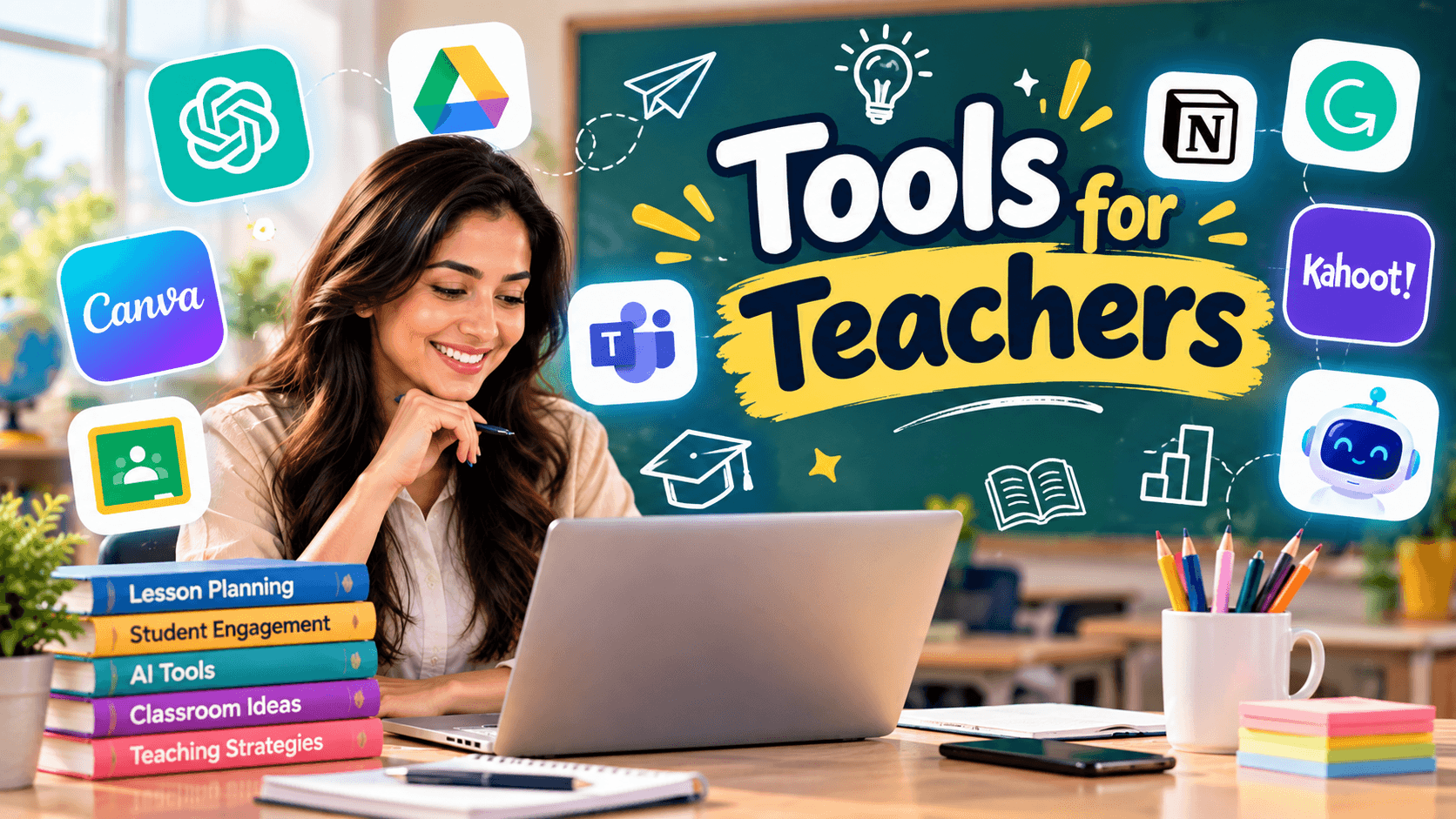
Teaching is one of the most rewarding professions, but it also comes with an overwhelming amount of daily responsibilities: lesson planning, grading, communication with parents, and classroom management. Thankfully, technology has made life easier for educators. Today, there are countless tools for teachers that help reduce workload, increase student engagement, and create a more organized teaching experience. In this article, we will explore the best available in 2026, why they matter, and how they can transform your classroom into a more productive and enjoyable learning environment.
Whether you are a new teacher looking for guidance or an experienced educator wanting to upgrade your teaching methods, this guide will help you find the right one to match your needs.
Why Tools for Teachers Are Essential Today
Modern classrooms are no longer limited to chalkboards and textbooks. With the rise of digital learning, tools for teachers have become a necessity rather than a luxury. These tools help in:
- Saving time on repetitive administrative tasks
- Enhancing student participation through interactive content
- Simplifying grading and feedback processes
- Improving communication between teachers, students, and parents
- Supporting remote and hybrid learning environments
As classrooms evolve, teachers who adopt the right are better equipped to deliver quality education efficiently, without burning out from excessive manual work.
Top Categories of Classroom Tools
To make this guide more useful, let’s break down the different categories of it based on their functionality.
1. Lesson Planning Tools
Creating engaging lesson plans can take hours every week. Fortunately, several tools for teachers are designed specifically to simplify this process.
- Planboard – A digital lesson planner that helps organize weekly and monthly schedules.
- ClassPoint – Turns PowerPoint presentations into interactive quizzes and polls.
These lesson planning not only saves time but also helps maintain consistency across the curriculum.
2. Classroom Management Tools
Managing a classroom, whether physical or virtual, requires the right systems in place. Some popular it in this category include:
- ClassDojo – Helps track student behavior and encourages positive engagement.
- Google Classroom – A widely used platform for assigning, collecting, and grading student work.
- Seesaw – Ideal for younger students, allowing them to showcase their learning digitally.
These classroom management makes it easier to maintain discipline, track progress, and keep parents informed.
3. Grading and Assessment Tools
Grading assignments manually can be exhausting, especially for teachers handling large classes. Thankfully, several tools for teachers automate this process.
- Google Forms with Add-ons – Automatically grades quizzes and provides instant feedback.
- Kahoot! – Makes assessments fun through gamified quizzes.
- Turnitin – Helps check for plagiarism while grading written assignments.
By using these tools, teachers can spend less time grading and more time focusing on actual teaching.
4. Communication Tools
Clear communication between teachers, students, and parents is crucial for academic success. Some effective it for communication include:
- Remind – A messaging app that allows safe communication with students and parents.
- Zoom & Google Meet – Essential for virtual classes and parent-teacher meetings.
- ClassTag – Combines communication with classroom updates and event scheduling.
This ensures that everyone stays informed and connected, reducing misunderstandings and missed information.
5. Content Creation and Engagement Tools
. It can make lessons more interactive and fun.
- Nearpod – Offers interactive lessons with real-time student participation.
- Flipgrid – Encourages students to express themselves through video responses.
- Padlet – A collaborative platform for brainstorming and sharing ideas.
These engagement-focused programs help create a more dynamic and student-centered classroom.
Benefits of Using Classroom Tools
Now that we’ve explored various categories, let’s discuss why investing time in learning these is worth it.
1. Time-Saving
Automation of repetitive tasks like attendance, grading, and reminders frees up valuable time for lesson preparation and personal development.
2. Improved Student Engagement
Interactive and gamified tools make learning enjoyable, helping students retain information better.
3. Better Organization
Digital planners and classroom management systems keep everything structured, reducing stress and confusion.
4. Enhanced Communication
With instant messaging and update tools, parents and students remain in the loop about assignments, deadlines, and announcements.
5. Data-Driven Insights
Many provide analytics on student performance, helping educators identify areas that need improvement.
How to Choose the Right Tools for Teachers
Here are a few tips:
- Identify Your Needs – Determine whether you need help with lesson planning, grading, communication, or engagement.
- Check Compatibility – Ensure the tool works well with your school’s existing systems (like Google Classroom or Microsoft Teams).
- Consider Student Age Group – Some tools are better suited for younger students, while others work well for high school or college-level learners.
- Look for Free or Affordable Options – Many excellent ones offer free versions or educational discounts.
- Read Reviews – Check feedback from other educators to see which tools are most effective in real classroom settings.
By following these steps, you can confidently choose the one that best fits your teaching style and classroom requirements.
Future of Tools for Teachers
As artificial intelligence continues to grow, the future of it looks even more promising. AI-powered grading systems, personalized learning platforms, and virtual reality classrooms are already emerging as the next big innovations in education technology. Teachers who stay updated with these advancements will be better positioned to provide high-quality, personalized education to their students.
Schools and educational institutions are also investing more in digital infrastructure, meaning access to advanced technology will only continue to expand in the coming years.
Conclusion
In today’s fast-paced educational environment, having the right tools for teachers is no longer optional it’s essential. From lesson planning and classroom management to grading and communication, these tools help educators save time, reduce stress, and create more engaging learning experiences for students.
By carefully selecting the tools that align with your teaching goals, you can transform your classroom into a more efficient, organized, and interactive space. Start exploring these today and take your teaching experience to the next level.
Related guides
Teacher tools for smoother classroom routines · Teaching tools for modern classrooms · Compare free AI tools for teachers
Further reading: UNESCO guidance on generative AI in education and research.