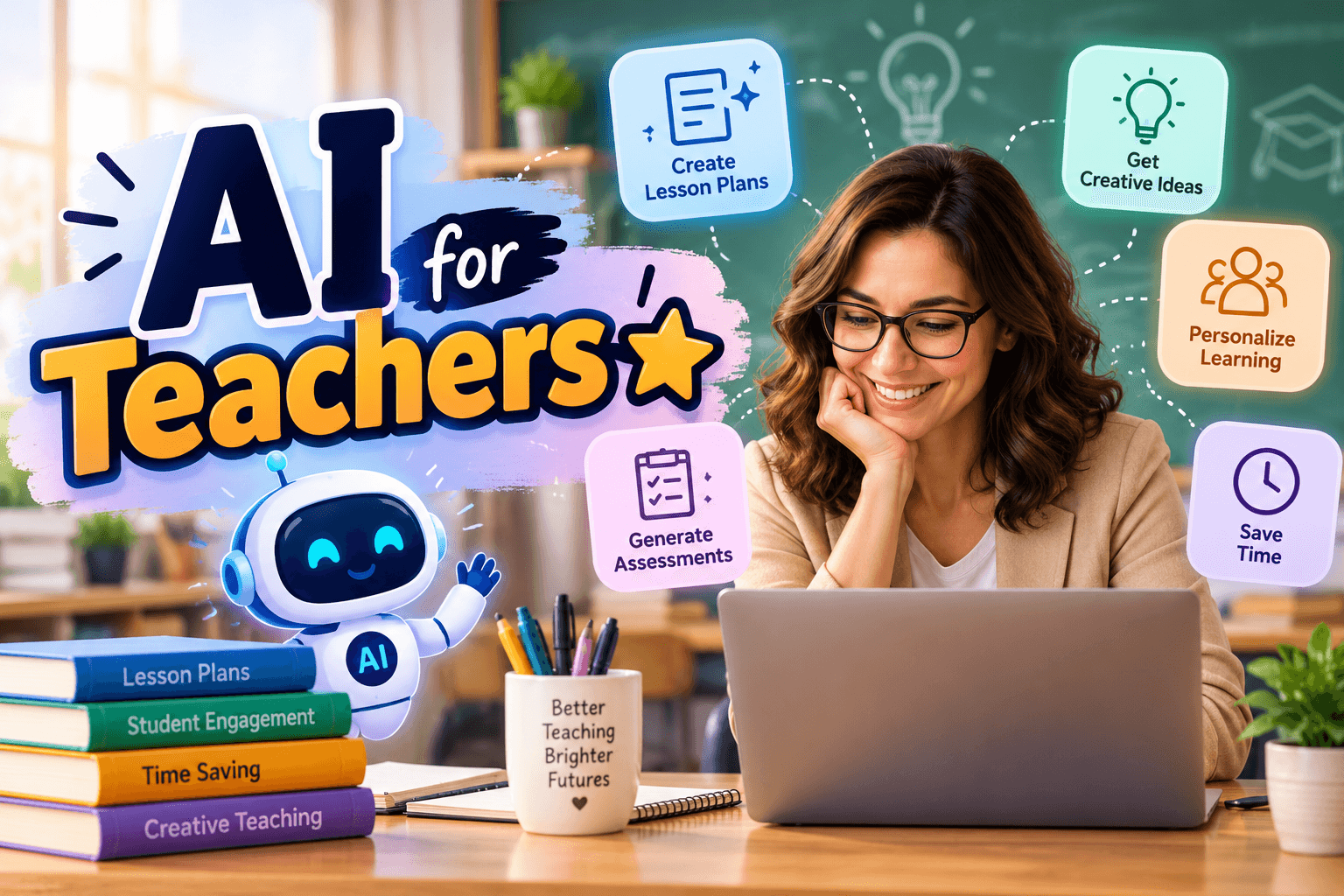
Teaching has always been one of the most demanding professions in the world. Between lesson planning, grading, classroom management, and meeting the individual needs of every student, educators often find themselves stretched thin. This is exactly where AI for teachers is making a real difference. Artificial intelligence tools are no longer futuristic concepts confined to tech labs; they are practical, everyday assistants helping teachers save time, personalize instruction, and improve student outcomes.
In this article, we’ll explore what it really means, the specific ways it’s being used in classrooms today, the benefits and challenges involved, and how educators can start integrating these tools responsibly and effectively.
What Does “AI for Teachers” Actually Mean?
When people talk about AI for teachers, they usually mean a range of digital tools powered by machine learning and natural language processing that support instructional and administrative tasks. These tools don’t replace teachers, they act as assistants that handle repetitive or time-consuming work so educators can focus on what matters most: connecting with students
Read more: magicschool ai review
It can include:
- Lesson and curriculum planning assistants
- Automated grading and feedback tools
- Personalized learning platforms
- Classroom management software
- Chatbots for student support
- Data analytics tools that track student progress
Each of these categories addresses a specific pain point that teachers face daily, and together they represent a shift toward smarter, more efficient education systems.
Why AI for Teachers Is Gaining Popularity
The rise of it isn’t just a passing trend, it’s a response to real, persistent challenges in education. Class sizes are growing, teacher workloads are increasing, and the need for personalized learning has never been higher. Here are some of the core reasons AI adoption is accelerating in schools worldwide.
1. Time-Saving Automation
One of the biggest advantages of it is time savings. Grading essays, quizzes, and assignments can take hours every week. AI-powered grading tools can now assess multiple-choice tests instantly and even provide preliminary feedback on written work, freeing up teachers to focus on lesson quality and student engagement rather than paperwork.
2. Personalized Learning at Scale
Every student learns differently, but it’s nearly impossible for one teacher to tailor lessons individually for 30+ students. It solves this by using adaptive learning platforms that adjust content difficulty based on a student’s performance. If a student struggles with fractions, for example, the system can automatically provide extra practice problems and simplified explanations, while advanced students move ahead at their own pace.
3. Data-Driven Insights
AI tools can analyze patterns in student performance that might be difficult for a human to spot quickly. Teachers can use these insights to identify students who need extra support, track engagement trends, and adjust their teaching strategies based on real data rather than guesswork.
4. Reducing Teacher Burnout
Teacher burnout is a global concern, with many educators leaving the profession due to overwhelming workloads. By automating repetitive tasks, it helps reduce stress and administrative burden, allowing educators to maintain a healthier work-life balance while still delivering high-quality education.
Practical Applications of AI for Teachers in the Classroom
Let’s look at some real-world, practical ways AI is being used by educators today.
Read more: magicschool ai vs eduaide
Lesson Planning Assistance
AI writing assistants can help teachers draft lesson plans, generate quiz questions, create rubrics, and even suggest discussion prompts based on a given topic or curriculum standard. Instead of starting from a blank page, teachers can use AI as a brainstorming partner, then refine the output to match their teaching style and classroom needs.
Automated Grading and Feedback
Tools that used to can now grade objective assessments instantly and provide draft feedback on essays, highlighting grammar issues, structural problems, or areas that need more clarity. While human review remains essential for nuanced grading, AI significantly speeds up the initial review process.
Intelligent Tutoring Systems
AI-powered tutoring platforms can work one-on-one with students outside of class hours, answering questions, explaining concepts in different ways, and providing practice exercises. This extends the reach of a teacher’s instruction beyond the classroom walls, giving students additional support whenever they need it.
Classroom Management Tools
Some AI systems help monitor classroom engagement, track attendance patterns, and flag potential behavioral or academic concerns early. This allows teachers to intervene proactively rather than reactively.
Multilingual and Accessibility Support
It is also proving invaluable in classrooms with diverse student populations. Real-time translation tools help teachers communicate with non-native speakers, while text-to-speech and speech-to-text technologies support students with learning differences or disabilities.
Benefits of AI for Teachers
To summarize, here are the key benefits schools and educators are experiencing:
- Efficiency: Less time spent on administrative tasks means more time for actual teaching.
- Personalization: Every student can receive content tailored to their learning pace and style.
- Consistency: AI tools apply grading criteria uniformly, reducing bias in assessment.
- Accessibility: Students with different needs get better support through adaptive technology.
- Professional Growth: Teachers can use AI-generated insights to refine their instructional methods over time.
Challenges and Concerns Teachers Should Know
While the benefits are significant, it’s important to approach it with a balanced perspective. There are real challenges that need to be addressed.
Data Privacy
Many AI education tools collect student data to function effectively. Schools and teachers must ensure any platform they use complies with data protection regulations and safeguards student privacy.
Over-Reliance on Technology
There’s a risk that teachers or students may become overly dependent on AI tools, potentially reducing critical thinking or creativity if not used thoughtfully. AI should support human judgment, not replace it.
Accuracy and Bias
AI systems are only as good as the data they’re trained on. Grading algorithms or content recommendations can sometimes reflect biases present in their training data, so human oversight remains essential.
Equity of Access
Not all schools have equal access to technology, internet connectivity, or the training needed to implement AI tools effectively. This digital divide needs to be addressed to ensure it benefits all students equally, not just those in well-resourced schools.
How Teachers Can Get Started with AI Tools
If you’re a teacher curious about integrating AI into your classroom, here are some practical steps to begin:
- Start small. Choose one task like lesson planning or quiz generation and experiment with an AI tool designed for that purpose.
- Review AI output critically. Always check AI-generated content for accuracy before using it with students.
- Involve students thoughtfully. Teach students how AI works and encourage responsible use rather than simply banning it.
- Seek professional development. Many schools now offer training on how to use it effectively and ethically.
- Stay updated. AI tools evolve quickly, so staying informed about new features and best practices will help you get the most value from them.
The Future of AI for Teachers
Looking ahead, AI for teachers is expected to become even more integrated into daily classroom life. We can anticipate more sophisticated tutoring systems, better predictive analytics for identifying at-risk students, and increasingly natural interactions between AI assistants and both teachers and students. However, the human element of teaching empathy, mentorship, and inspiration will remain irreplaceable. AI is best understood as a powerful assistant, not a substitute for the relationships and guidance that great teachers provide.
Conclusion
AI for teachers represents one of the most significant shifts in modern education, offering real solutions to long-standing challenges like heavy workloads, personalized learning gaps, and administrative burnout. From automated grading to intelligent tutoring systems, these tools are helping educators work smarter, not harder. However, successful integration requires thoughtful implementation, ongoing training, and a commitment to using AI as a support system rather than a replacement for genuine teaching.
As classrooms continue to evolve, teachers who learn to effectively leverage it will be better equipped to meet the diverse needs of their students while reclaiming valuable time for what truly matters teaching, mentoring, and inspiring the next generation.
Read more: how to create a lesson plan with ai
Related guides
undefined · AI in education: benefits and challenges · A weekly AI teaching workflow
Further reading: UNESCO guidance on generative AI in education and research.