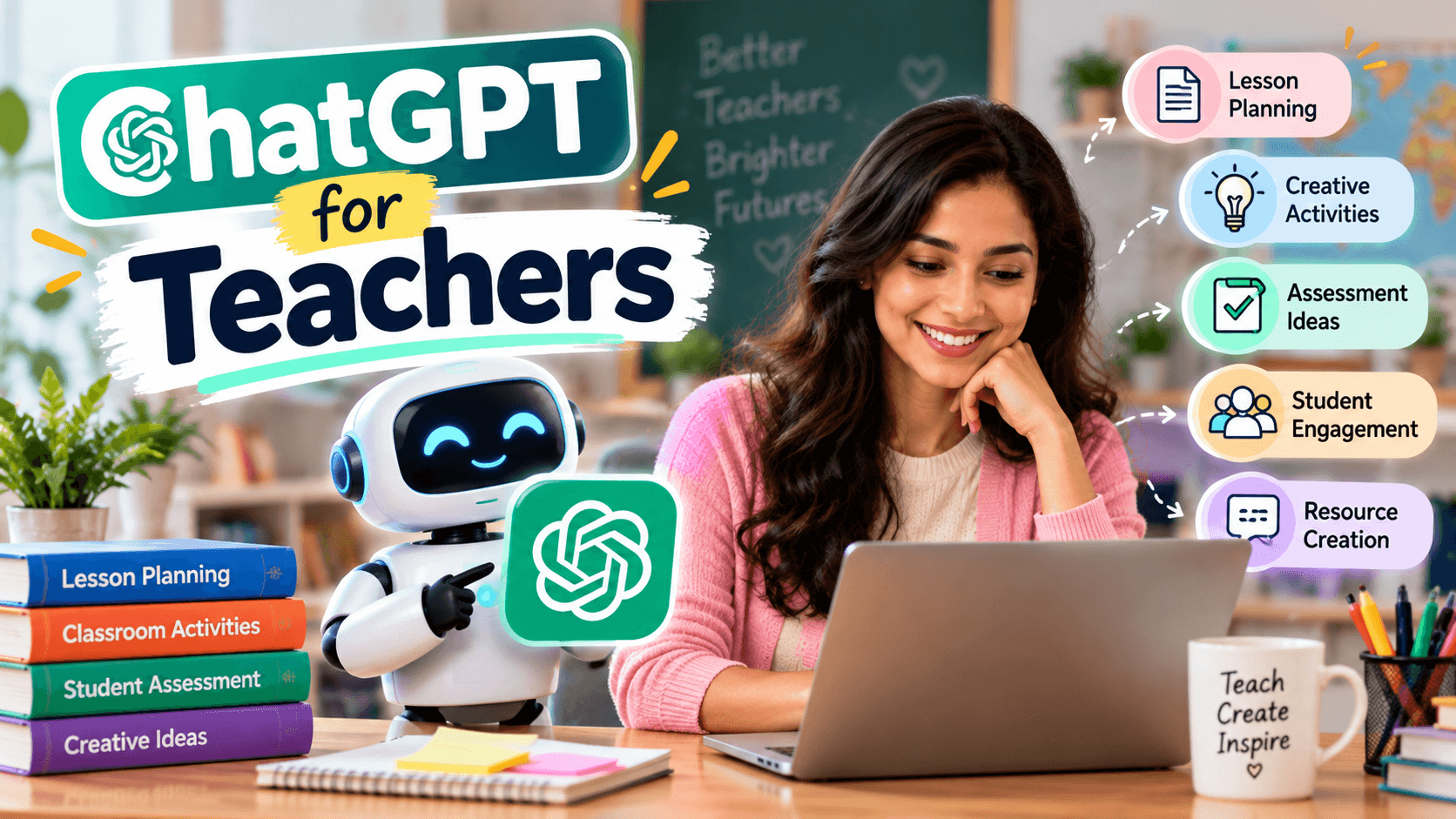
Education is changing faster than ever, and artificial intelligence is right at the center of that change. Among the many AI tools available today, ChatGPT for teachers has become one of the most talked-about resources in schools, colleges, and online learning platforms. Teachers around the world are discovering that ChatGPT is not just a chatbot, it’s a powerful teaching assistant that can save time, spark creativity, and personalize learning for every student.
In this article, we’ll explore exactly how it works, why it matters, practical ways to use it in the classroom, and the precautions every educator should keep in mind. Whether you’re a school teacher, a university lecturer, or a private tutor, this guide will help you understand how to make the most of ChatGPT in your teaching journey.
Read next: chatgpt prompts for math teachers
What Is ChatGPT for Teachers?
ChatGPT for teachers refers to the use of OpenAI’s ChatGPT tool specifically to support teaching-related tasks. This includes lesson planning, creating quizzes, grading assistance, generating explanations, and even helping teachers communicate more effectively with parents and students. Unlike traditional teaching software, ChatGPT is conversational teachers simply type what they need, and the AI generates a response instantly.
The growing popularity of it comes from its flexibility. It can adapt to different subjects, grade levels, and teaching styles, making it useful for a kindergarten teacher just as much as a university professor.
Why Teachers Are Turning to ChatGPT
The teaching profession is demanding. Teachers often spend hours outside the classroom planning lessons, creating materials, and grading assignments. ChatGPT for teachers offers a practical solution to this workload problem by automating repetitive tasks and giving teachers more time to focus on actual instruction and student engagement.
Here are some of the main reasons teachers are adopting ChatGPT:
- Time-saving: Lesson plans, worksheets, and quizzes that once took hours can now be drafted in minutes.
- Personalization: ChatGPT can generate content suited to different learning levels, helping teachers support both struggling and advanced students.
- Creativity boost: Teachers can brainstorm new activities, project ideas, and engaging classroom discussions with AI assistance.
- Accessibility: ChatGPT can simplify complex topics into easy-to-understand language for younger students or those with learning difficulties.
Practical Ways to Use ChatGPT
1. Lesson Planning Made Easy
One of the most common uses of ChatGPT for teachers is lesson planning. Instead of starting from a blank page, teachers can ask ChatGPT to outline a full lesson plan based on a topic, grade level, and learning objective. For example, a teacher preparing a science lesson on the water cycle can request an outline complete with an introduction, key concepts, classroom activities, and assessment questions.
This doesn’t replace the teacher’s expertise, it simply gives them a strong starting point that they can refine and personalize for their own classroom.
2. Creating Quizzes and Assessments
Generating quizzes manually can be tedious, especially when you need multiple versions to prevent cheating. It makes this process incredibly fast. Teachers can request multiple-choice questions, short-answer questions, or even essay prompts on any topic, along with answer keys.
3. Differentiated Instruction
Every classroom has students with different learning speeds and abilities. ChatGPT can help teachers create differentiated materials for instance, generating a simplified version of a reading passage for struggling readers and a more advanced version for gifted students, all based on the same core topic.
4. Grading and Feedback Support
While ChatGPT should never fully replace a teacher’s judgment in grading, it can help draft rubrics, suggest feedback phrasing, and identify common mistakes in student writing. This speeds up the feedback process while still keeping the teacher in control of final grades.
5. Improving Communication with Parents
Writing emails and progress reports to parents takes time, especially when trying to phrase feedback constructively. It can help draft professional, empathetic messages that communicate a student’s progress clearly and respectfully.
6. Classroom Activity and Game Ideas
Keeping students engaged is one of the biggest challenges teachers face. ChatGPT can suggest interactive games, group activities, and discussion topics tailored to a specific subject, making lessons more dynamic and fun.
7. Professional Development
Teachers can also use ChatGPT to prepare for professional development sessions, write reflective teaching journals, or even get suggestions for classroom management strategies when dealing with behavioral challenges.
Read next: chatgpt prompts for classroom management
Benefits of Using ChatGPT in Education
The benefits of ChatGPT for teachers go beyond simple convenience. When used thoughtfully, it can transform the overall teaching and learning experience:
- Reduces teacher burnout by cutting down on repetitive administrative work
- Encourages innovation in lesson design and classroom activities
- Supports inclusive education by generating materials for different learning needs
- Enhances student engagement through more creative and varied content
- Bridges knowledge gaps by explaining difficult concepts in simpler terms
Challenges and Limitations Teachers Should Know
Despite its many advantages, it is not without limitations. Educators need to use it responsibly and be aware of the following challenges:
Accuracy issues: ChatGPT can sometimes generate incorrect or outdated information, so teachers must always fact-check content before sharing it with students.
Over-reliance risk: If used carelessly, both teachers and students may become overly dependent on AI, reducing critical thinking and original effort.
Academic integrity concerns: Students may misuse ChatGPT to complete assignments without genuine understanding, which means teachers need clear policies on acceptable AI use.
Lack of emotional understanding: ChatGPT cannot replace the human connection, empathy, and mentorship that a real teacher provides in the classroom.
Data privacy: Teachers should avoid entering sensitive student information into ChatGPT to protect student privacy and comply with school data policies.
Best Practices for Using ChatGPT for Teachers
To get the most out of ChatGPT while avoiding its pitfalls, teachers should follow a few best practices:
- Always review AI-generated content before using it in class and treat ChatGPT as a first draft, not a final product.
- Be specific with prompts the more detail you provide about grade level, subject, and goals, the better the output.
- Use it as a support tool, not a replacement your expertise and judgment as an educator remain irreplaceable.
- Teaching students about responsible AI use helps them understand ChatGPT as a learning aid, not a shortcut for cheating.
- Protect student data never share personal or identifiable student information in prompts.
The Future of ChatGPT in Education
As AI technology continues to evolve, it is expected to become even more integrated into everyday classroom practices. Future updates may bring more subject-specific tools, better alignment with curriculum standards, and improved accuracy for educational content. Schools and institutions that embrace this technology thoughtfully with proper training and clear guidelines are likely to see improved teaching efficiency and richer learning experiences for students.
Rather than fearing AI as a threat to traditional teaching, forward-thinking educators are learning to work alongside it, using ChatGPT as a partner that handles routine tasks so they can focus on what truly matters: inspiring and guiding their students.
Conclusion
ChatGPT for teachers is proving to be a valuable ally in modern education. From lesson planning and quiz creation to personalized learning and parent communication, this AI tool offers practical solutions to many everyday challenges teachers face. However, it’s important to remember that ChatGPT works best as a support system, not a substitute for a teacher’s expertise, creativity, and human connection.
By using ChatGPT responsibly and combining it with sound pedagogical judgment, teachers can save time, reduce stress, and create more engaging, effective learning experiences for their students. As classrooms continue to evolve, those who learn to harness the power of it today will be well-prepared for the future of education tomorrow.
Read next: chatgpt prompts for grading
Related guides
AI for teachers: practical classroom applications · Ready-to-use ChatGPT prompts for teachers · AI support for parent communication
Further reading: UNESCO guidance on generative AI in education and research.