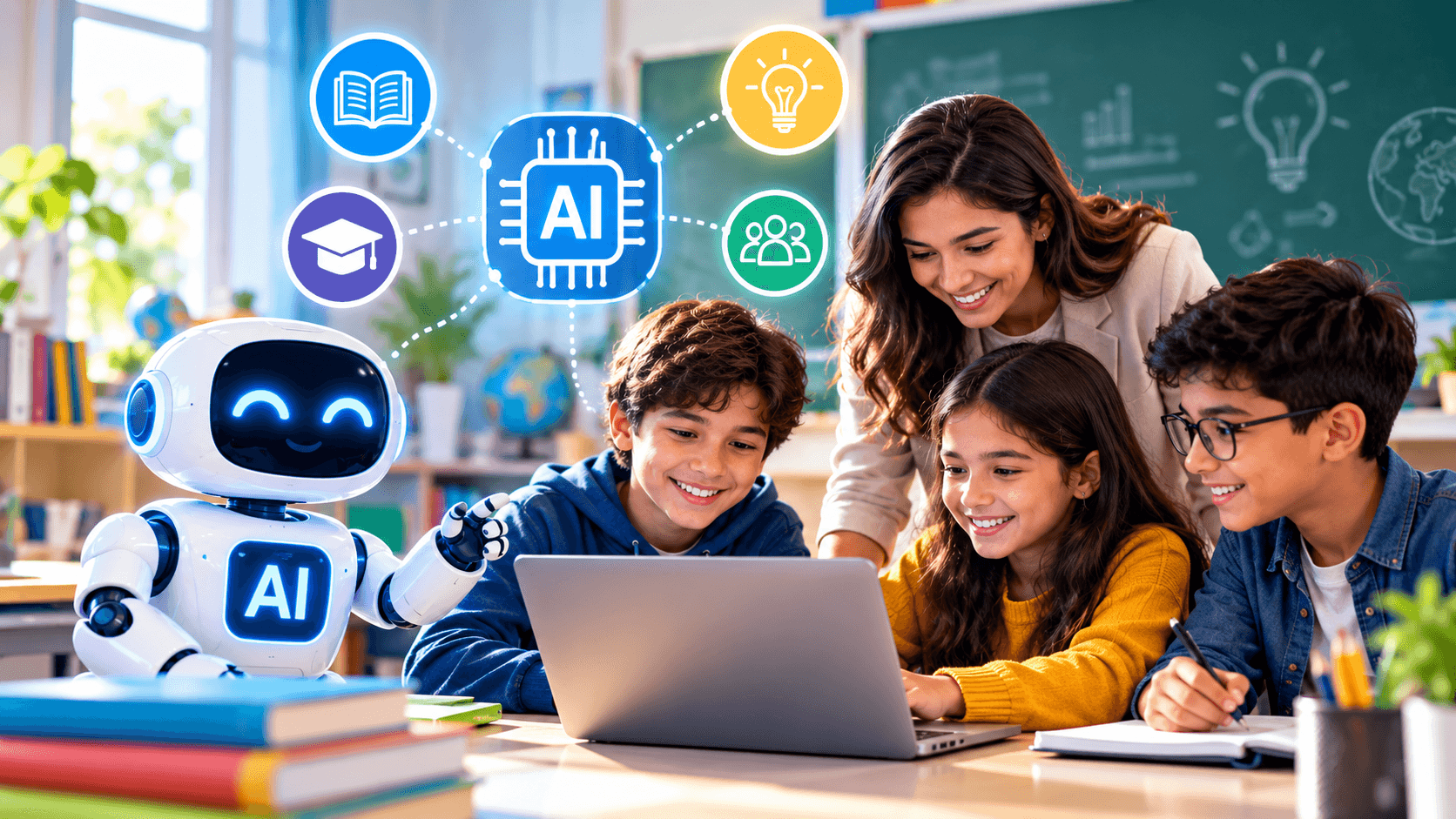
Imagine a classroom where every student has a patient tutor available at any hour, where teachers spend less time grading and more time inspiring, and where lessons adapt to each child’s pace. A decade ago, that sounded like science fiction. Today, the rapid growth of AI in schools is turning it into everyday reality. From adaptive learning apps to smart grading assistants, artificial intelligence is quietly reshaping how students learn and how teachers teach.
But what does this shift really mean? Is it a breakthrough, a risk, or both? In this guide, you’ll learn what educational AI actually is, how it’s being used, what benefits and challenges it brings, and how schools can adopt it wisely.
What Is AI in Schools?
Artificial intelligence refers to computer systems that can perform tasks that normally require human intelligence, such as recognizing patterns, understanding language, making predictions, and learning from data. In education, these systems analyze how students interact with lessons. They then use that information to personalize content, automate routine tasks, and provide instant feedback.
Common forms of educational AI include
- Intelligent tutoring systems that guide learners through problems step by step
- Automated grading and feedback tools that speed up assessment
- Language and accessibility tools, such as translation, speech-to-text, and text-to-speech
- Generative chatbots that explain concepts, create practice quizzes, or help brainstorm ideas
The important thing to understand is that these tools are designed to support learning, not replace teachers. The best results happen when human educators and smart technology work together.
Key Benefits of Artificial Intelligence in Education
The benefits of AI in schools go far beyond convenience. Here are the most significant advantages backed by how these tools work in practice.
1. Personalized Learning
No two students learn the same way. Some grasp fractions instantly, while others need extra examples. Adaptive software tracks each learner’s strengths and gaps, then adjusts the pace, difficulty, and style of content. A student who is struggling receives more practice, while an advanced learner moves ahead without getting bored.
2. Time Savings for Teachers
Teachers often spend hours on grading, lesson planning, and paperwork. AI tools can draft lesson outlines, generate quiz questions, sort assignments, and give first-pass feedback on writing. That reclaimed time can go toward what matters most: mentoring students, running discussions, and offering emotional support.
3. Instant Feedback
Traditionally, a student might wait days to learn they misunderstood a concept. With AI-powered practice tools, feedback arrives in seconds. Quick correction helps students fix mistakes before they become habits and builds confidence through steady progress.
4. Accessibility and Inclusion
Technology can open doors for learners who face barriers. Speech recognition helps students who struggle with writing. Text-to-speech supports students with reading difficulties or visual impairments. Real-time translation helps students who are still learning the classroom language. These tools make lessons more inclusive for a wider range of learners.
5. Preparing Students for the Future
Artificial intelligence is already part of workplaces, healthcare, finance, and creative industries. Students who learn to use these tools thoughtfully, questioning outputs and checking facts, build digital literacy and critical thinking skills that employers increasingly value.
Real-World Examples in the Classroom
Educational AI is not just theory. Many tools are already in use around the world:
- Khanmigo by Khan Academy acts as a tutor that asks guiding questions instead of simply handing out answers, encouraging students to think for themselves.
- Duolingo uses machine learning to adjust language exercises to each learner’s level and to spot which words they tend to forget.
- Microsoft Immersive Reader supports reading comprehension by reading text aloud, breaking words into syllables, and translating passages.
- Google Classroom features help teachers organize assignments and provide learning support tools that streamline daily tasks.
These examples show a common pattern. The strongest tools do not do the thinking for students. They guide, support, and challenge them.
Challenges and Concerns to Consider
Despite its promise, AI in schools comes with real challenges that leaders, teachers, and parents cannot ignore.
Data privacy. Educational tools collect large amounts of student data, including performance history, writing samples, and sometimes behavior patterns. Schools must make sure this information is stored securely and used only for legitimate educational purposes, in line with privacy laws in their region.
Academic integrity. Generative tools can write essays and solve math problems in seconds. This raises legitimate worries about cheating and shallow learning. Schools need clear guidelines about when and how such tools may be used, along with assignments that reward original thinking, personal reflection, and showing the process.
Bias and accuracy. AI systems learn from data, and data can contain bias or errors. A tool might produce incorrect facts with total confidence or favor certain perspectives. Students and teachers should treat AI outputs as a starting point, never as the final word.
The digital divide. Not every student has reliable internet access or a modern device at home. If schools adopt advanced tools without addressing access, existing inequalities can grow wider.
Overreliance. If students lean on technology too heavily, skills like writing, problem-solving, and memory may weaken. Balance is essential.
How Schools Can Use AI Responsibly
Adopting new technology successfully takes planning. Here are practical steps that schools and teachers can follow.
Start with clear policies. Successful AI in schools programs begin with written guidelines that explain acceptable use, data protection rules, and consequences for misuse. Involve teachers, parents, and students in creating them so everyone understands the expectations.
Train teachers first. Educators need time and support to learn what these tools can and cannot do. Professional development helps teachers use technology confidently instead of feeling pressured or replaced.
Teach AI literacy. Students should learn how these systems work, why they make mistakes, and how to verify information. Skills such as fact-checking, prompt writing, and ethical reasoning are becoming as important as traditional research skills.
Keep humans in the loop. Important decisions, such as grades, placement, and discipline, should always involve a teacher’s judgment. Technology can inform decisions, but it should not make them alone.
Start small and evaluate. Pilot a tool with one class or grade level, gather feedback, measure results, and expand only when it proves valuable.
The Future of AI in Schools
Looking ahead, educational technology will likely become more capable and more personal. Learning assistants may track progress across subjects and suggest tailored study plans. Virtual labs and simulations could let students explore science experiments or historical events in immersive ways. Early-warning systems might help teachers spot students who are falling behind before problems grow serious.
At the same time, the human side of education will only become more valuable. Empathy, creativity, mentorship, teamwork, and ethical judgment are things machines cannot truly replicate. The schools that thrive will be those that use technology to amplify these human strengths rather than replace them.
Frequently Asked Questions
Will AI replace teachers?
No. Technology can automate tasks and provide practice, but teaching involves relationships, motivation, and understanding students as individuals. Teachers remain the heart of education.
Is AI in schools safe for students?
It can be, provided schools choose trusted tools, protect student data, follow privacy regulations, and supervise use. Age-appropriate settings and clear rules are essential.
Can students use AI tools for homework?
It depends on school policy. Many educators encourage using AI for brainstorming, explanations, and practice, while requiring students to complete final work in their own words and to be open about how they used the tools.
How can parents support responsible use at home?
Talk openly with children about what these tools do, encourage them to double-check information, and remind them that AI should support learning rather than replace effort.
Conclusion
The story of AI in schools is still being written, and the ending depends on the choices educators, parents, and policymakers make today. Used thoughtfully, artificial intelligence can personalize learning, free teachers from repetitive work, and open doors for students who once struggled to keep up. Used carelessly, it can raise concerns about privacy, fairness, and shallow learning.
The path forward is balanced. Embrace the opportunities, set clear boundaries, teach students to think critically, and always keep human connection at the center of the classroom. When technology and teachers work side by side, the result is not a machine-run school but a smarter, more inclusive, and more inspiring place to learn.
Related guides
How artificial intelligence supports learning · AI for education: learning applications · Student data privacy and AI
Further reading: UNESCO guidance on generative AI in education and research.