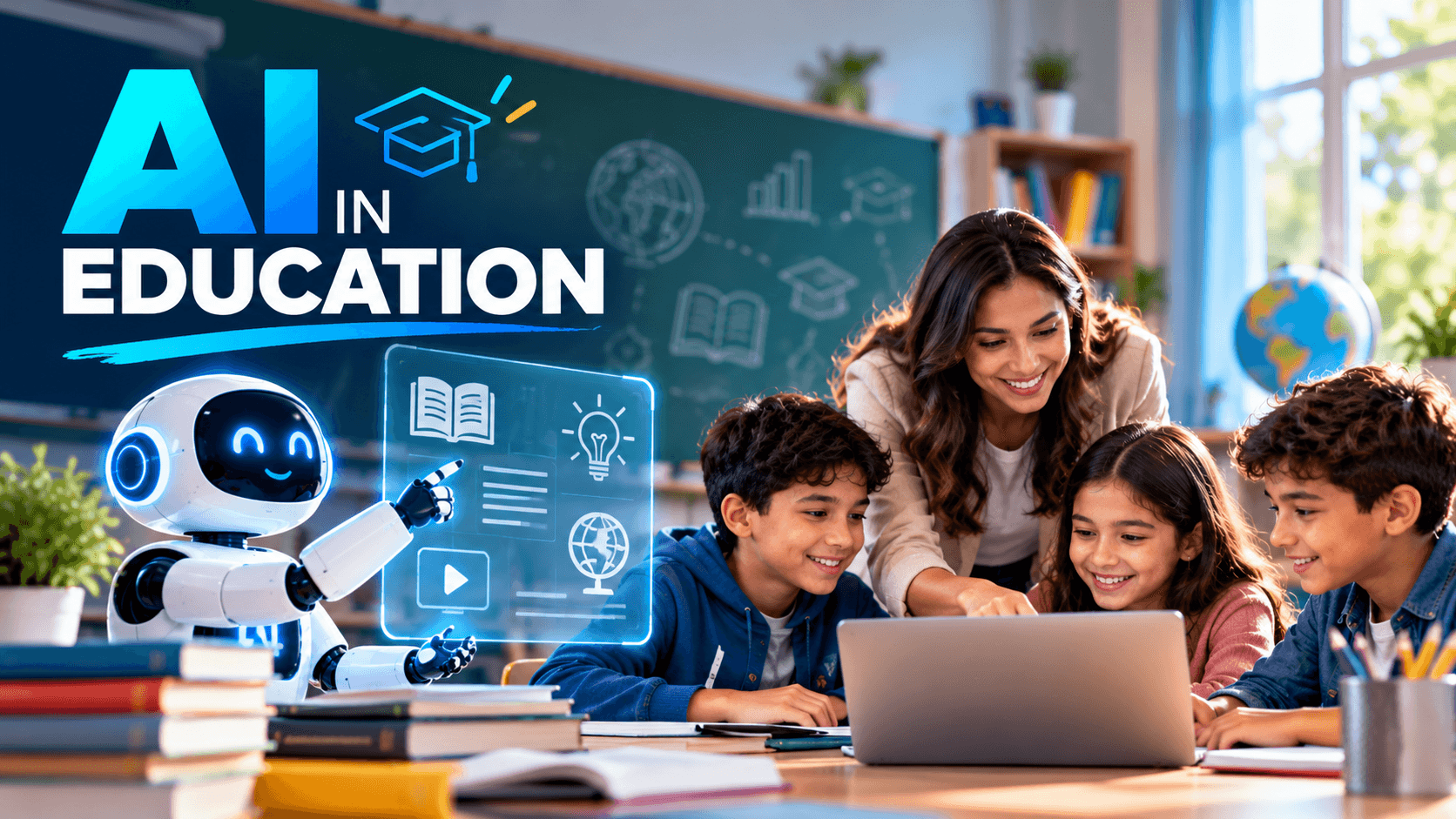
Imagine a classroom where every student learns at their own pace, receives instant feedback, and never feels left behind. Not long ago, that sounded like a distant dream. Today, artificial intelligence is turning it into everyday reality. The rise of AI in education is changing how students study, how teachers teach, and how schools are managed. From smart tutoring apps to automated grading tools, intelligent technology is influencing learning at every level, from primary school to university.
In this guide, you’ll learn what this technology actually is, how it is used in real classrooms, its biggest benefits, the challenges to watch out for, and where it is heading next.
What Is AI in Education?
These include recognizing patterns, understanding language, making predictions, and learning from data. When applied to teaching and learning, these systems study how students interact with content and adjust the experience in response.
Think of it as a very attentive assistant. It notices which topics a student struggles with, which questions they answer quickly, and which concepts need more practice. It then uses that information to suggest the next best step.
Common examples include:
- Adaptive learning platforms that change lesson difficulty based on performance
- AI chatbots and virtual tutors that answer questions around the clock
- Speech recognition tools that help with reading and language practice
- Automated assessment systems that grade quizzes and essays
- Recommendation engines that suggest videos, articles, or exercises
How AI Is Used in Classrooms Today
1. Personalized Learning
Traditional classrooms often follow a one-size-fits-all approach. A teacher presents a lesson, and thirty students with different abilities are expected to keep up. AI-powered platforms change this by building a unique learning path for each student.
If a learner masters fractions quickly, the system moves them forward. If another student struggles, the platform offers extra explanations, simpler examples, or additional practice. This keeps students challenged without overwhelming them.
2. Intelligent Tutoring Systems
Not every student can afford a private tutor. Intelligent tutoring systems help close that gap by offering step-by-step guidance in subjects like math, science, and languages. These tools can explain a concept in several ways, give hints instead of answers, and respond at any hour, which is especially helpful for students studying late or learning remotely.
3. Automated Grading and Feedback
Grading takes up a large share of a teacher’s week. AI tools can now score multiple-choice tests instantly and provide feedback on written work, such as grammar, structure, and clarity. This does not replace a teacher’s judgment on deeper ideas, but it saves hours of repetitive work and gives students faster feedback while the material is still fresh in their minds.
4. Language Learning and Translation
AI-powered apps help learners practice speaking, correct pronunciation, and translate text in real time. For students who are learning in a second language, live captions and translation tools make lessons far more accessible.
5. Accessibility and Inclusive Learning
Technology can remove barriers for students with disabilities. Text-to-speech tools help learners with visual impairments, speech-to-text tools support students who struggle with writing, and predictive text assists those with dyslexia. Captioning tools help deaf and hard-of-hearing students follow lectures. These features make learning more inclusive for everyone.
6. Administrative Automation
Schools handle attendance, scheduling, admissions, and countless reports. AI can automate many of these routine tasks, reduce paperwork, and free educators to spend more time on teaching and student support.
Key Benefits of AI in Education
The growing attention on this technology is not just hype. Schools and universities are seeing measurable advantages.
Personalized attention at scale. A teacher cannot sit with every student for an hour a day, but AI tools can offer individual support to all of them at once.
Immediate feedback. Students no longer wait days to learn whether they understood a topic. Quick feedback helps them correct mistakes early.
Time savings for teachers. By automating grading, lesson planning support, and administrative work, AI gives teachers more time for creativity, mentoring, and human connection.
Better learning insights. Analytics can highlight which students are falling behind, which topics confuse the whole class, and which teaching methods work best. Teachers can act on this data before small gaps become big problems.
Greater accessibility. Learners in remote areas, or those with limited access to quality teachers, can benefit from high-quality digital instruction.
Increased engagement. Interactive quizzes, gamified lessons, and conversational tutors make learning more active and enjoyable, which often improves motivation.
Challenges and Risks to Consider
Despite its promise, AI in education comes with real concerns that schools must address thoughtfully.
Data privacy and security. AI systems rely on student data, including performance records, learning habits, and sometimes personal information. Schools must ensure this data is stored securely and used responsibly.
Algorithmic bias. If an AI system is trained on biased or limited data, it may treat some students unfairly. Regular audits and diverse training data are essential.
Over-reliance on technology. If students depend on AI to write essays or solve problems, they may miss the chance to build critical thinking, creativity, and problem-solving skills.
Academic integrity. Generative AI tools can produce essays and answers in seconds. Schools need clear policies, and teachers may need to rethink assignments to focus on original thinking, discussion, and process, not just final answers.
The digital divide. Not every student has reliable internet or a modern device. Without careful planning, AI could widen the gap between well-resourced and under-resourced schools.
Teacher training Educators need proper training and support to use AI tools confidently and effectively.
Best Practices for Schools and Teachers
Successful adoption of AI in education depends on a thoughtful, human-centered approach. Here are practical steps to consider:
- Start with a clear goal. Choose tools that solve a specific problem, such as reducing grading time or supporting struggling readers, rather than adopting technology for its own sake.
- Keep teachers in the loop. AI should support educators, not replace them. Final decisions about students should always involve a human.
- Protect student privacy. Review each tool’s data policy, and choose providers that follow strong security and privacy standards.
- Teach AI literacy. Help students understand how AI works, where it can be wrong, and how to use it ethically and responsibly.
- Set clear guidelines. Define when and how students may use AI tools for assignments, and explain why.
- Test and evaluate. Pilot new tools with a small group, gather feedback, and measure results before scaling up.
- Focus on equity. Make sure all students have access to the devices, connectivity, and support they need.
The Future of AI in Education
The next decade promises even more change. Experts expect AI in education to become more conversational, more personalized, and more deeply integrated into everyday learning. Here are a few trends to watch:
- AI learning companions that guide students through entire courses, remember their progress, and adapt to their goals
- Immersive learning that combines AI with virtual and augmented reality for lifelike science labs, historical simulations, and language practice
- Skills-based learning paths that use AI to match students with the skills employers will need
- Early intervention tools that spot signs of struggle or disengagement and alert teachers sooner
- Lifelong learning support that helps adults reskill and upskill throughout their careers
As these tools mature, the role of the teacher will evolve, too. Rather than being the sole source of information, teachers will act more like coaches and mentors, guiding students to think critically, collaborate, and apply knowledge in the real world.
Frequently Asked Questions
Will AI replace teachers?
No. AI can automate tasks and provide personalized practice, but it cannot replace empathy, mentorship, and human connection. The most effective classrooms combine technology with skilled teachers.
Is AI safe for students to use?
It can be, when schools choose trusted tools, protect student data, and set clear usage guidelines. Supervision and digital literacy are key.
How can students use AI responsibly?
Students should use AI to explore ideas, get explanations, and practice skills, not to copy answers. Verifying information and citing sources remain essential habits.
What subjects benefit most from AI?
Math, languages, science, and writing are common areas, but AI tools now support nearly every subject, from coding to music.
Conclusion
AI in education is not about replacing teachers or turning classrooms into machines. It is about giving every learner the support they need and giving educators the time and insight to do what they do best: inspire, guide, and connect. The technology brings powerful benefits, including personalized learning, instant feedback, better accessibility, and smarter administration. It also brings responsibilities around privacy, fairness, and responsible use.
Schools that approach it with clear goals, strong ethics, and a commitment to teacher and student training will be best positioned to benefit. The future of learning is not human versus machine. It is humans and machines working together to help every student reach their full potential.
Related guides
AI in schools: classroom uses and risks · AI for teachers: practical classroom applications · Student data privacy and AI
Further reading: UNESCO guidance on generative AI in education and research.